

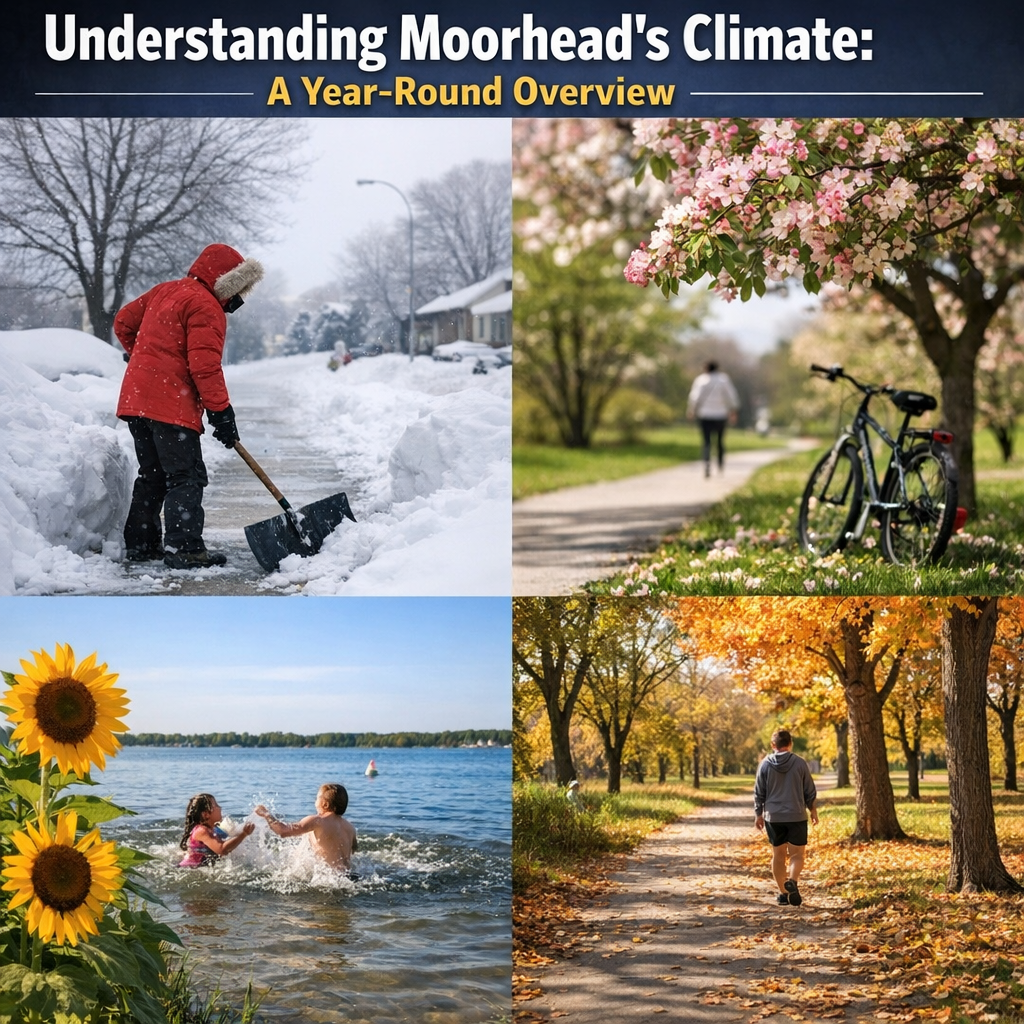
Moorhead, Minnesota, located in the Red River Valley, experiences a humid continental climate characterized by significant seasonal variations. Understanding these patterns is essential for residents and visitors alike.
Seasonal Temperature Variations
Summers in Moorhead are warm and humid, with average high temperatures reaching 82°F (28°C) in July. In contrast, winters are notably cold, with average lows dipping to 1°F (-17°C) in January. This stark contrast between seasons is a hallmark of the region’s climate.
Precipitation and Snowfall
Annual precipitation averages around 22.92 inches (582 mm), with June being the wettest month, receiving approximately 4.11 inches (104 mm) of rainfall. Snowfall is a significant aspect of Moorhead’s winter, averaging about 53 inches (135 cm) annually, contributing to the region’s winter landscape.
Environmental Considerations
The city’s proximity to the Red River makes it susceptible to flooding, particularly during spring thaws. In recent years, Moorhead has undertaken initiatives to model and mitigate the impacts of intense rainfall and potential flooding, aiming to enhance the city’s resilience to extreme weather events.
Understanding Moorhead’s climate is vital for planning daily activities, agricultural practices, and infrastructure development. Staying informed about seasonal changes and potential environmental challenges helps the community adapt and thrive throughout the year.